Open to Agentic AI Engineer roles

Portrait of Kaushik Appani

Kaushik Appani

Agentic AI Engineer · Pune, India

I build AI agents that run real lending workflows.

I'm a Senior Software Engineer on the AI & Agentic Systems team at Rahi Platform Technology. I design LLM orchestration, MCP tool servers and voice agents for loan origination and collections. Before that I spent 3.5 years building the high-volume Java and Spring Boot systems that agents like these depend on.

ask-kaushik idle

    A small router-and-tools loop over this page's facts. It runs in your browser with no LLM, no API key and no network calls.

    3 agent systems
    in fintech: loan origination, collections call intelligence, voice verification
    2 shipped AI apps
    Ascend (Windows + macOS) and TL;DR (Chrome), both open source
    30,000 accounts
    through an end-of-day Spring Batch run in 15 minutes
    3.5+ years
    shipping production systems for lending and financial services

    01 Agent work

    Agents in production at Rahi

    In July 2026 I moved from the Loan Management System team to AI & Agentic Systems. This is client work, so there are no screenshots. Here is what each system does and how it is built.

    Agentic loan origination

    Leading

    LLM-based orchestration that automates loan processing from application to decision. The agent works through the origination workflow and calls platform services as tools, instead of each step waiting on a person.

    • LLM orchestration
    • MCP tools
    • Spring AI
    • AWS Bedrock

    Collections call intelligence

    Architect

    An MCP framework with LLM processing pipelines that analyze collection call recordings. It scores call quality and customer sentiment and automates the workflow decision that follows each call. It has driven measurable gains in collection effectiveness.

    • MCP
    • LLM pipelines
    • Sentiment & quality scoring
    • Workflow automation

    AI voice tele-verification

    Built

    A voice agent that verifies customers over the phone. Its questions are context-aware and change with the customer's answers, so verification no longer needs a person on every call.

    • Voice agent
    • Dynamic questioning
    • LLM

    LLMOps for all of the above

    Platform

    Model access runs through AWS Bedrock. LangFuse traces every agent run, so we can see prompts, tool calls and latency and use them to tune performance and reliability in production.

    • AWS Bedrock
    • LangFuse
    • Tracing
    • Observability

    02 Personal projects

    Built and shipped on my own time

    Two open-source agent apps that you can install today. The code is public, so you can check how they work.

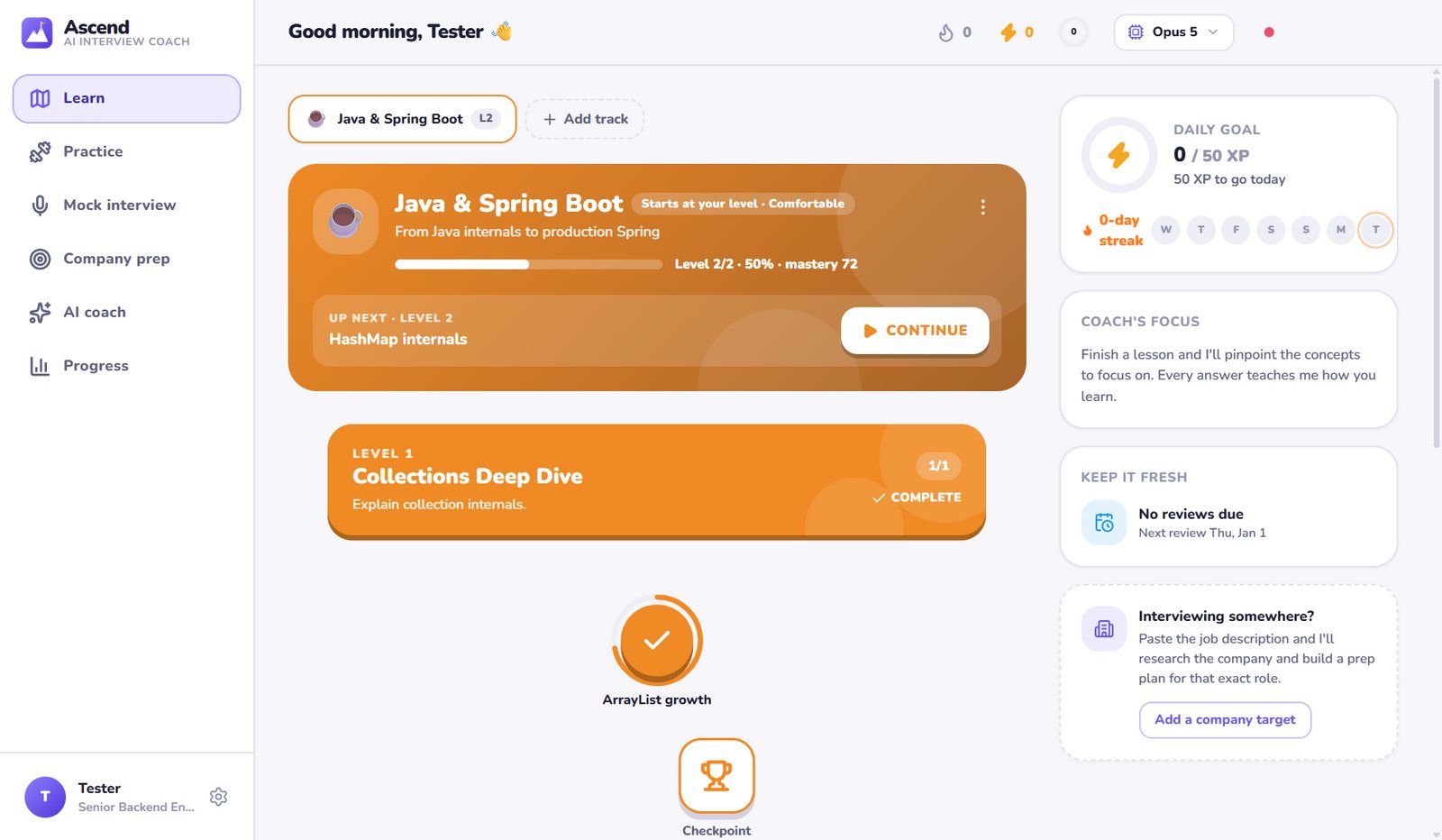
    Ascend's learning path screen: a Java and Spring Boot track at level 2 with mastery score, daily XP goal and coach's focus panel
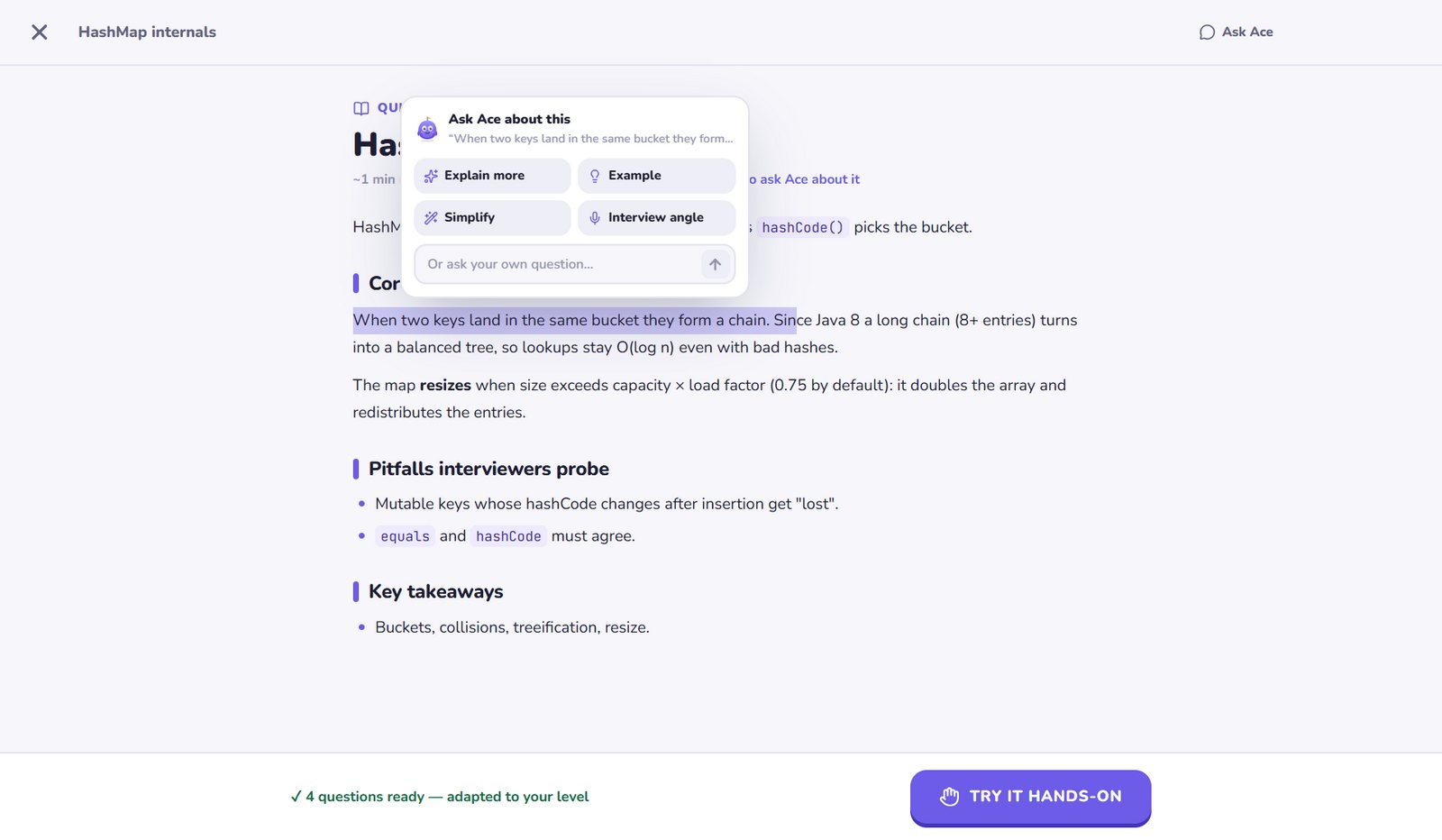
    Ascend lesson primer with a highlighted passage and the Ask Ace menu to explain, simplify or show the interview angle

    Featured · Desktop app · v1.1.0 for Windows & macOS

    Ascend: an AI interview coach built on the Claude Agent SDK

    A Duolingo-style coach with no pre-written course. Claude designs a 10-level roadmap for you, writes each lesson, grades your answers like an interviewer, runs mock interviews and researches the company you're interviewing with. It adapts to what you already know.

    1. Learner stateMCP tools
    2. Claudejson_schema output
    3. Validate & repairguardrail
    4. Mastery engineElo + SM-2
    5. Next lesson

    Agent engineering

    • Least-privilege sessions. Every agent runs with a strict MCP config and gets only the tools its task needs: WebSearch, WebFetch and the app's own tools. It has no shell, no file access, and no user hooks or CLAUDE.md.
    • In-process MCP server with six tools: get_learner_profile, get_topic_mastery, get_recent_mistakes, record_coach_note, suggest_practice, schedule_review.
    • Schema-enforced output. Roadmaps, questions, grades and interview scorecards are JSON-schema outputs. They are validated and retried, and every question is repaired if needed before it renders.
    • Long-lived sessions. The mock interviewer and the coach chat keep one agent process alive across turns using streaming input, and they resume after idling or a restart.
    • Latency work. The grader process starts warming up while you are still typing. Primers stream token by token and show live tool activity.
    • Memory the user can see. After each lesson the agent writes a debrief and saves lasting observations. It can add a remedial topic to your path, and you can edit all of it.
    • A deterministic core. Claude writes the lessons and grades the answers. An Elo-style mastery score and SM-2 spaced repetition decide what comes next.
    • Claude Agent SDK
    • MCP
    • TypeScript
    • Electron
    • React 19
    • Tailwind 4
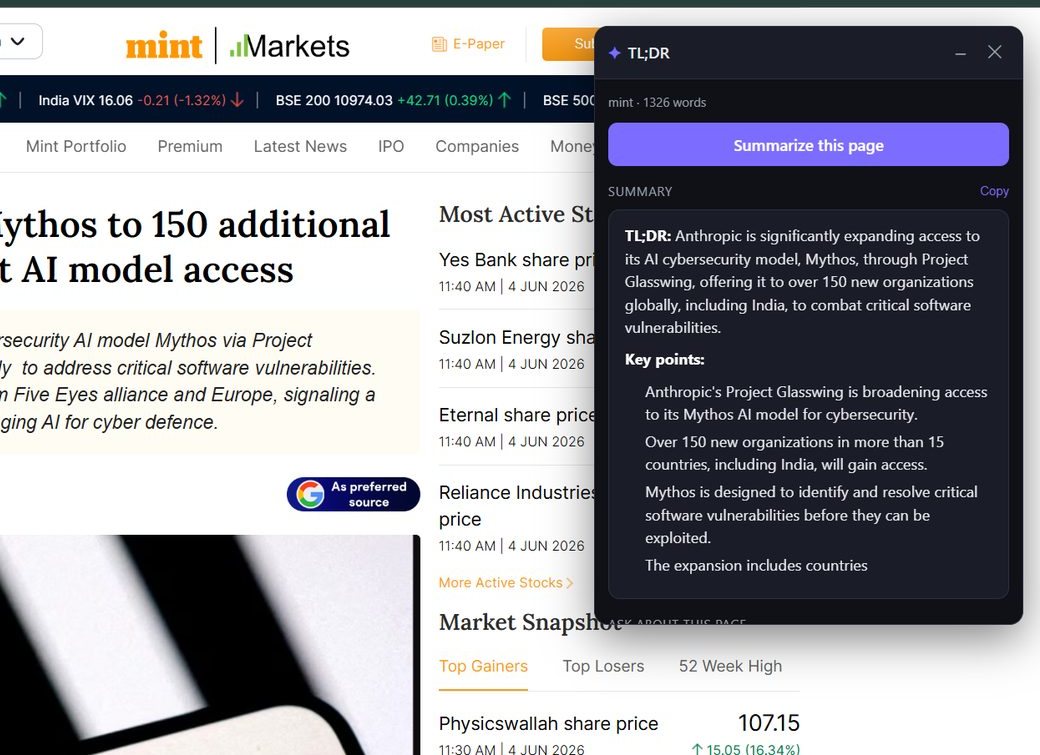
    TL;DR floating panel on a news article, showing a one-paragraph summary and key points

    Chrome extension · Manifest V3 · MIT

    TL;DR: an assistant for any web page that uses MCP tools with your approval

    It summarizes any web page or PDF and lets you chat with it. If you connect remote MCP servers, the model can act on what you're reading. For example, it can log the expense from a bank alert or check the ticket a page mentions, but only after you approve the call.

    1. Page text
    2. ModelGemini / Groq
    3. Tool call?
    4. Approval cardRun · Skip
    5. MCP server
    6. Grounded answer

    Agent engineering

    • MCP client written by hand. It speaks JSON-RPC over the Streamable HTTP transport, with a handshake, tool discovery and auth headers. No SDK, no build step.
    • A human approves every call. Each tool call shows the tool, the reason and the exact arguments. If you press Skip, the model is told and answers with what it already has. An unanswered prompt counts as Skip after two minutes.
    • Limits on runaway loops. Each message has a cap on tool calls, and closing the popup declines any call that is still pending.
    • Quick actions written by the model. After a summary, the model suggests one-tap actions for that page, such as Log ₹4,800 expense. Actions linked to tools run when tapped, and the tap counts as approval.
    • Tools are used only where they're needed. Tools are offered only in Q&A. A summary is always a single fast call.
    • Works with more than one provider and keeps data private. It runs on Gemini or Groq (Llama 3.3, GPT-OSS), and you choose the model. Your keys stay in the browser, PDFs are parsed locally, and there is no backend or telemetry.
    • MCP client
    • Tool calling
    • Gemini
    • Groq
    • Vanilla JS
    • Chrome MV3

    More on github.com/kaushikappani, including NoteIt (React, Node, MongoDB, Redis) and earlier experiments.

    03 How I build agents

    Six rules I keep coming back to

    Each rule comes with the place where you can see it in my work.

    1. The model suggests. Code decides.

      Language work goes to the LLM. State, scores and money movement stay in tested, deterministic code.

      Seen in: Ascend's Elo + SM-2 engine · tested Java behind Rahi's MCP tools

    2. Give agents as few tools as possible.

      An agent gets the tools its task needs and nothing more. Anything it doesn't need is off by default.

      Seen in: Ascend sessions with no shell or file access · TL;DR offers tools only in Q&A

    3. Side effects need a person or a limit.

      Use approval cards, fail-safe timeouts and per-turn caps on tool calls. If something goes wrong, the agent should do nothing rather than the wrong thing.

      Seen in: TL;DR's Run / Skip cards, 2-minute auto-skip and tool-call cap

    4. Outputs follow a schema.

      Use JSON-schema contracts, validation, retries and repair. Code downstream should never have to guess at what the model meant.

      Seen in: Ascend roadmaps, grades and scorecards

    5. Trace every run.

      If you can't see a run's prompts, tool calls and latency, you can't fix it in production.

      Seen in: LangFuse tracing on Bedrock at Rahi

    6. Treat latency as a feature.

      Stream output, warm processes ahead of time and keep sessions alive. Users judge an agent partly by how long they wait.

      Seen in: Ascend's pre-warmed grader and resumable sessions

    04 Experience

    Why the backend years matter

    An agent is a distributed system with an unpredictable step in the middle. I spent three years on the predictable parts: concurrent money movement, event-driven workflows and batch jobs at scale.

    1. Rahi Platform Technology

      Pune

      Senior Software Engineer · AI & Agentic Systems

      Jul 2026 – Present

      • Leading development of an agentic loan origination system that uses LLM-based orchestration across the full loan processing workflow.
      • Designed an MCP framework with LLM pipelines that analyzes collection call recordings, scores call quality and sentiment, and automates the workflow decisions that follow.
      • Built an AI voice tele-verification agent that asks context-aware, dynamic questions, which reduces manual verification work.
      • Run production agents on AWS Bedrock with LangFuse tracing to improve performance, observability and reliability.

      Software Engineer · Loan Management System

      Jul 2025 – Jul 2026

      • Delivered a cloud-agnostic, multi-tenant LMS as SaaS, covering collections, payments, accounting, reconciliation and customer communication.
      • Built orchestration engines for payment appropriation, collections allocation, penalties, reversals and accounting entries.
      • Introduced an event-driven architecture on Kafka that connects the accounting, collections, notification and workflow services.
      • Built Spring Batch end-of-day jobs with retry and checkpointing that process 30,000+ loan accounts in 15 minutes.
      • Integrated payment gateways, dialer systems and SMS, email and WhatsApp channels for automated collections.
    2. Bajaj Finserv Direct (Bajaj Markets)

      Pune

      Software Engineer II · Bajaj AMC Distributor Portal

      Jun 2024 – Jul 2025

      • Built backend services for a high-traffic platform used for mutual fund distributor onboarding, partner management and financial operations.
      • Designed role-based access control (RBAC) and authorization workflows for a user hierarchy of distributors, admins and operations teams.
      • Integrated Kotak APIs for real-time KYC, account verification and onboarding.
      • Cut response times through query, indexing and caching work on PostgreSQL and MongoDB.

      Software Engineer I · UGRO Capital credit CRM

      Jun 2023 – Jun 2024

      • Built backend modules for a credit and loan-processing CRM: onboarding, lead workflows, loan processing and collections.
      • Automated workflows and business-rule validation to cut manual work and turnaround time in credit operations.

      Byte Intern · Enterprise Applications

      Jan 2023 – Jun 2023

      • Built REST APIs and backend logic with Java and Spring Boot, and helped debug production issues.

    05 Stack

    What I work with

    Agentic AI

    • Claude Agent SDK
    • MCP servers & clients
    • Spring AI
    • AWS Bedrock
    • LangFuse
    • Tool calling
    • Structured outputs
    • Streaming
    • Voice agents
    • Anthropic, OpenAI, Gemini & Groq APIs

    Backend

    • Java
    • Spring Boot
    • Spring Security
    • Spring Batch
    • JPA
    • Kafka
    • Microservices
    • REST

    Data

    • PostgreSQL
    • MySQL
    • MongoDB
    • Redis

    Cloud & DevOps

    • AWS
    • Docker
    • Jenkins
    • Git
    • SonarQube

    Apps

    • TypeScript
    • JavaScript
    • React
    • Angular
    • Electron
    • Chrome extensions

    B.Tech, Electronics & Communication Engineering

    Vellore Institute of Technology · 2019–2023 · CGPA 8.4 · Projects Head, IEEE Power & Energy Society

    06 Contact

    Building agents that have to work in production? Let's talk.

    I'm open to Agentic AI Engineer and AI Engineer roles. I'm based in Pune, India (IST). Email is the fastest way to reach me.